What Is a Dual-Lens Security Camera and How Does It Work?
A dual-lens security camera is a single camera with two built-in lenses, each capturing its own video feed at the same time. Instead of covering a single angle, it monitors two at once, giving you the coverage of multiple cameras in one device.
Each lens has its own image sensor, so both feeds run independently without affecting each other. The result is a wider, more complete view of your space without the cost or complexity of installing several separate cameras.
Key Takeaways
- A dual-lens security camera combines two lenses into a single unit, each with its own image sensor and video feed.
- The two most common configurations are wide-angle plus telephoto (for zoom and tracking) and two wide-angle lenses stitched together for panoramic coverage.
- A 180° security camera is a specific type of dual-lens camera that combines two wide-angle lenses to create a seamless panoramic view.
- One dual-lens camera can often replace two or three single-lens cameras, reducing installation costs and blind spots.
- Both lenses operate with night vision, so full coverage is maintained even in low light conditions.
How a Dual-Lens Camera Works
To understand how a dual-lens camera works, start with the basics. A camera lens focuses light onto an image sensor, which converts that light into a digital video feed. In a dual-lens camera, there are two separate lenses and two separate sensors, both working simultaneously.
Most dual-lens cameras come in one of two configurations.
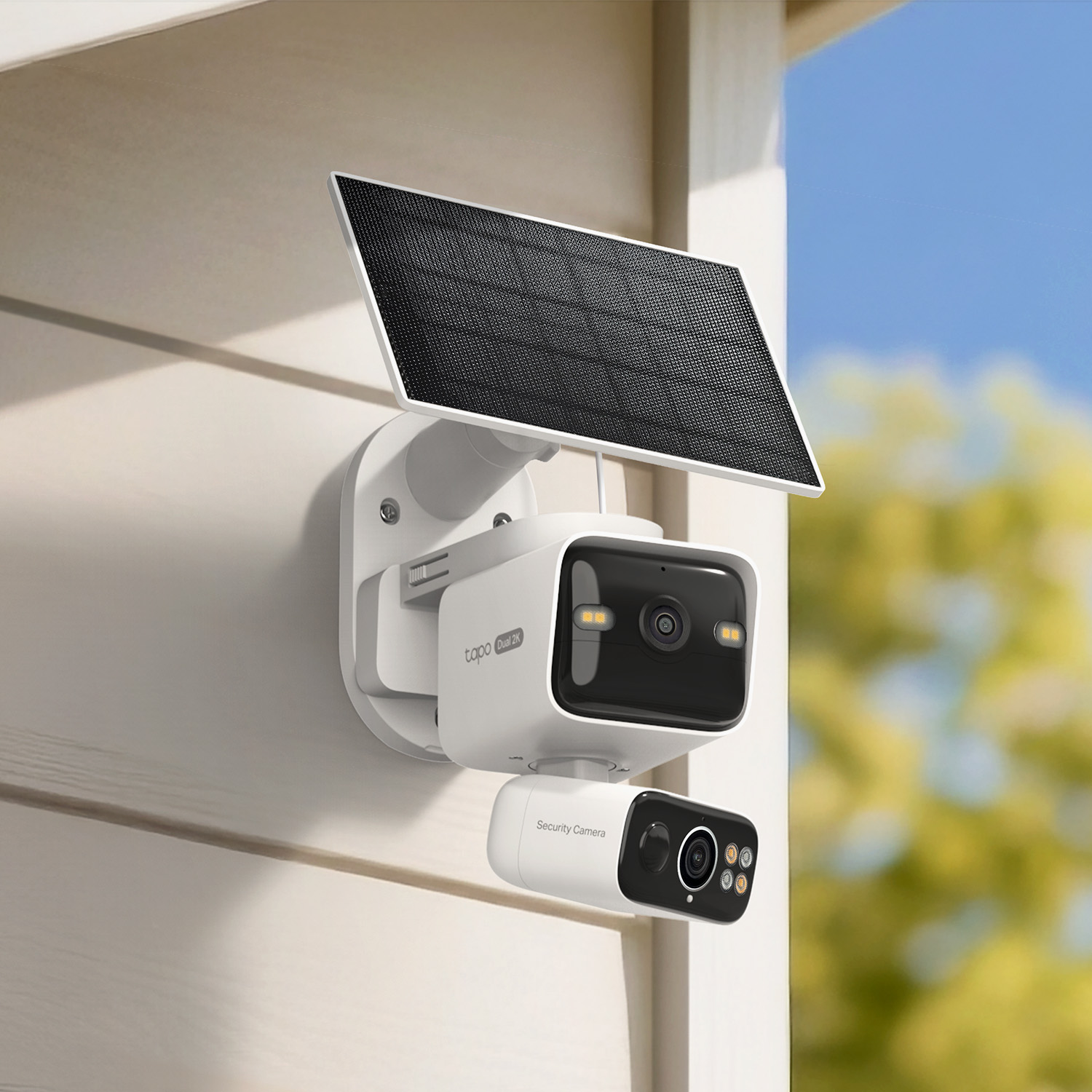
The first pairs a wide-angle lens with a telephoto lens. The wide-angle lens captures a broad view of the scene, while the telephoto lens zooms in for close-up detail. This setup is useful for identifying faces, license plates, or activity in a particular spot, without losing view of the larger area.
The second configuration uses two wide-angle lenses pointed in slightly different directions. Their feeds are combined digitally to create a seamless panoramic view, often spanning 180°. This setup is about the breadth of coverage rather than the zoom.
Both configurations give you more visual information from a single device than a standard single-lens camera can provide.
Dual-Lens Cameras Deliver 180-Degree Coverage
A 180-degree security camera is a specific type of dual-lens camera. It uses two wide-angle lenses, positioned to capture adjacent areas, and combines their feeds into a continuous panoramic image.
This is the most common dual-lens configuration for home security. It eliminates the gaps that single-lens cameras typically leave on either side of their frame.
Where a standard camera might cover 90° to 110°, a 180° security camera covers nearly the full front of a property from a single mounting point. That's especially useful at entry points like front doors, gates, and garage entrances, where activity can happen across a wide area. You get a complete picture of the scene without piecing together feeds from multiple cameras.
Dual-Lens vs Single-Lens Security Cameras
Both camera types have their place. The right choice depends on what you're covering and how many blind spots you can afford to leave. Here's a side-by-side comparison:
|
Feature |
Dual-Lens Camera |
Single-Lens Camera |
|
Field of view |
Up to 180° or wide + telephoto |
Typically 90° to 130° |
|
Blind spots |
Minimal with wide panoramic coverage |
More common at edges of frame |
|
Cameras needed |
One can cover large or complex areas |
May need two or more for the same area |
|
Zoom capability |
Yes, with wide + telephoto config |
Limited to digital zoom |
|
Cost per camera |
Higher upfront |
Lower upfront |
|
Best use case |
Driveways, yards, large entry areas |
Hallways, small rooms, focused entry points |
Dual cameras offer more coverage per device, but that doesn't make them the right call in every situation. A single-lens camera is often the better fit for compact spaces or lower-traffic areas where wide coverage isn't a priority. For larger outdoor areas or monitoring multiple entry points with a single camera, the dual-lens advantage becomes more significant.
Four Reasons to Choose a Dual-Lens Security Camera
A dual-lens security camera isn't just a camera with an extra lens. The two lenses work together to do things a single-lens camera simply can't. Here are four practical reasons to consider choosing a dual-lens camera for your security setup.
One Camera Covers More Ground
One dual-lens camera can often replace two or three single-lens cameras in areas where coverage gaps are a problem. Instead of mounting separate devices to cover adjacent zones, a single dual-lens camera handles both angles from one location.
That means fewer devices to install, fewer cables to run, and fewer cameras to manage. For driveways, backyards, or wide entryways, a dual-lens camera offers real savings on both equipment and setup time.
Wide-Angle and Zoom Views Run Simultaneously
With a wide-angle and telephoto setup, both lenses are working at the same time. You don't have to choose between a broad overview and a close-up view. You could capture the entire scene of your front yard or driveway, while zooming in to identify a visitor at your front door.
One lens keeps the full scene in frame, while the other focuses on a spot where you need more detailed footage. This is useful when you want to monitor your entire yard or driveway, while keeping a closer eye on a front door, a package drop-off spot, or a parked vehicle.
Motion Triggers Automatic Zoom Tracking
On some cameras, the two lenses work together to capture activity as it’s happening. The wide-angle lens acts as a detection trigger. When it picks up motion, it signals the pan/tilt lens to automatically rotate and zoom in on the source.
This feature is called synchronized smart tracking. You don't have to tap, adjust, or redirect the camera yourself. A dual-lens Wi-Fi camera with this feature gives you a wide-scene monitor and a responsive zoom camera working together as one system.
Night Vision Works Across Both Lenses
Both lenses in a dual-lens IP camera have their own night vision, so coverage doesn't drop when the light does. Whether you're monitoring a shaded side of the house or an unlit backyard, both feeds stay active in low light conditions.
On models with multiple night vision modes, you can set each lens to match its specific area. Options typically include infrared for discreet, power-efficient monitoring, or full-color with spotlights for more detailed visibility.
When a Dual-Lens Camera Is the Smarter Choice
Dual-lens cameras tend to deliver the most value when a single lens would leave blind spots or require multiple cameras to compensate.
Large outdoor areas with more than one entry point are a natural fit. Dual cameras make sense for situations like monitoring a driveway with a side gate, a backyard with a garage and a fence line, or a front yard with visitors approaching from different directions.
For package monitoring or identifying people dropping by, a dual-lens setup lets you keep the full porch in frame with one lens while the other zooms in on whoever approaches. The same logic applies to garages, construction sites, or any shared outdoor space where activity happens across a wide area.
That said, a single-lens camera is often the better choice for focused spots: a hallway, a single doorway, or a small room where a tight angle is all you need. If you're covering a compact space with one clear line of sight, a dual-lens camera may be more than the situation calls for.
Tapo Dual-Lens Security Cameras: Find the Right Model
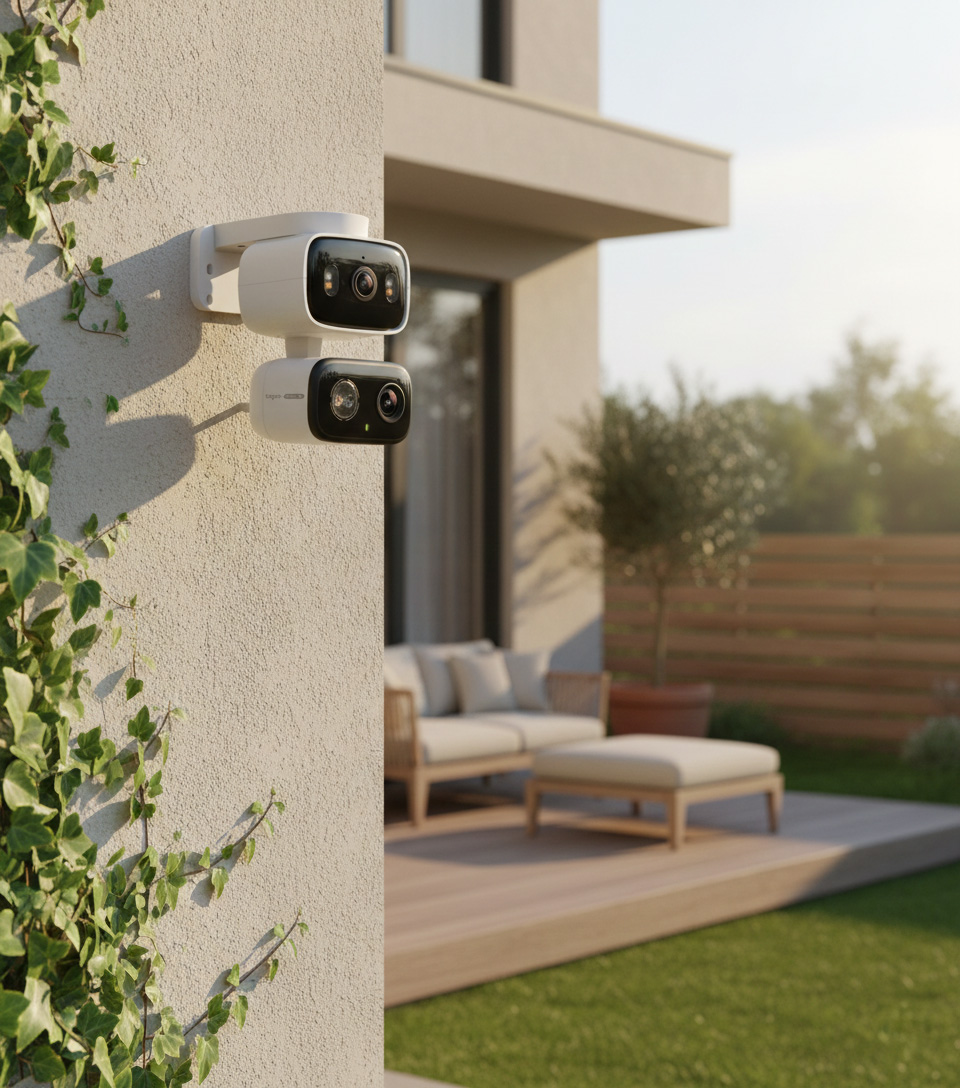
If you're shopping for the best dual-lens security camera for your home, Tapo offers two strong options designed for different setups.
Tapo C246D: Best for Wired Indoor and Outdoor Use
The Tapo C246D pairs a fixed 2K wide-angle lens (130° field of view) with a 2K pan/tilt telephoto lens. You can monitor a wide area of your property, while the second lens captures another area, tracks moving subjects, or zooms in for sharp detail on specific activity.
It supports synchronized smart tracking, One-Tap Smart Focus, and AI-powered detection for people, pets, vehicles, and baby cries, all without a subscription. The IP65 rating means it handles heavy rain and dust, so it’s a solid outdoor choice.
It works with Amazon Alexa, Google Assistant (Streaming via Google limited to display on Chromecast and Nest devices), Samsung SmartThings, and IFTTT. Available as a single unit or a two-pack for larger properties.
Tapo C645D Kit: Best for Wire-free Outdoor Coverage
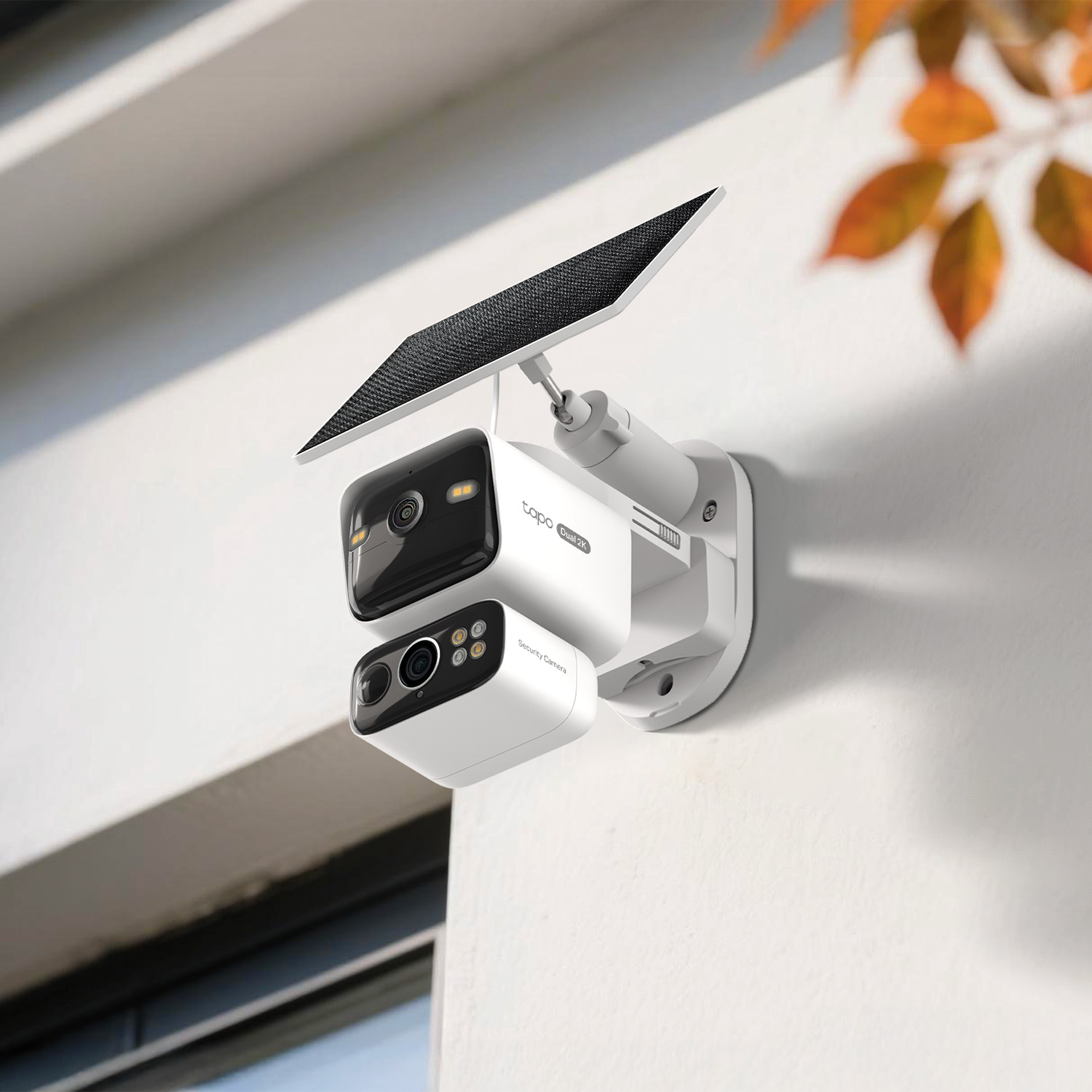
The Tapo C645D Kit is the solar-powered option for locations where running a cable isn't practical. Just one hour of sunlight powers it for a full day, and the 10,000 mAh backup battery lasts up to four months per charge with typical usage.
It features dual 2K lenses, a 165° field of view with its fixed lens, synchronized smart tracking, One-Tap Smart Focus, and subscription-free AI-powered detection for people, pets, and vehicles. With an ultra-wide field of view, it’s a strong choice for large homes with multiple entry points. The second lens can pan and tilt to track moving subjects, and zoom in to capture crystal-clear details when activity is happening.
Both cameras support local storage via a microSD card (sold separately, up to 512 GB) or optional Tapo Care cloud storage.
Explore the full Tapo dual-lens camera collection to compare models and find the right fit for your setup.
Why Choose a Tapo Dual-Lens Camera?
Tapo's dual-lens cameras are built around a few practical advantages that go beyond just having two lenses.
Monitor two areas at once. The fixed lens keeps a broad area in frame while the pan/tilt lens covers a second zone independently. You get both views at once, without switching between them.
Smart tracking that works automatically. When the fixed lens detects motion, it signals the pan/tilt lens to rotate and zoom in on the source. The two lenses work as a coordinated system, so you always have both a wide view and a responsive close-up.
AI-powered detection with no subscription required. Both cameras identify people, pets, and vehicles without a monthly fee, keeping notifications relevant and reducing false alerts. The C246D also adds baby cry detection for indoor use.
Solar-powered option for wire-free coverage. For locations without a nearby power outlet, the C645D Kit runs on solar power with a high-capacity backup battery. It stays online even when the sun is scarce.
See More With Less
A dual-lens camera gives you more visual coverage per device, fewer blind spots, and smarter motion tracking than a single-lens alternative, all from a single mounting point.
Whether you're covering a large yard, a wide driveway, or an area with multiple entry points, the dual-lens setup lets you reduce the number of cameras needed without sacrificing coverage.
Explore Tapo's dual-lens camera collection to find the right model for your home.
Frequently Asked Questions
- What is a dual-lens camera?
A dual-lens camera is a single security camera with two independent lenses, each with its own image sensor. Both lenses capture footage at the same time, giving you two views from one device. That might be a wide-angle view paired with a telephoto zoom, or two wide-angle feeds combined into a 180° panoramic image.
- Are dual-lens cameras worth it?
They're worth considering when you need to cover a large or complex area without installing multiple cameras. A single dual-lens camera can monitor two zones simultaneously and automatically track motion. For smaller, focused spaces, a standard single-lens camera is usually the more practical fit.
- Do dual-lens cameras use more power?
They typically draw more power than a single-lens camera because two image sensors operate simultaneously. Consider solar-powered options like the Tapo C645D Kit, designed to handle that demand outdoors, without a wired power source.
- Do dual-lens cameras have night vision?
Yes. Each lens operates independently at night, so both zones remain covered in low-light conditions. Depending on the model, you may have multiple night vision modes to choose from, such as infrared for discreet monitoring or full-color with spotlights for greater detail.