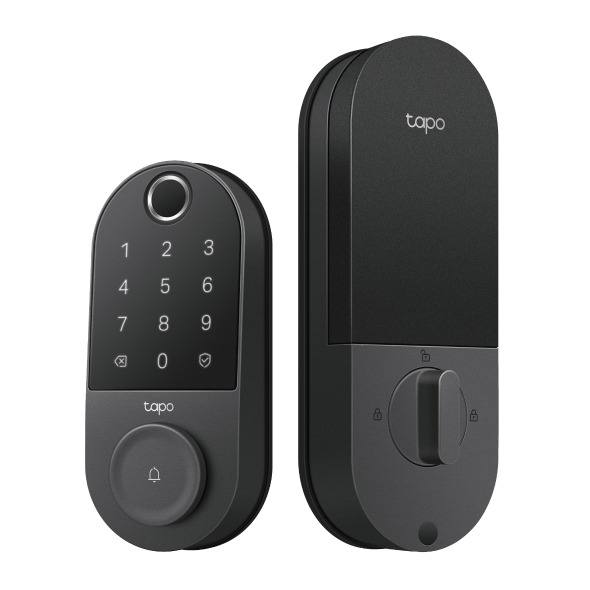
Tapo DL130 vs DL110: Two Smart Locks Compared
The Tapo DL130 raises the bar for what a smart lock can do. It adds palm vein recognition alongside fingerprint access, a dual battery system designed for long-lasting reliability, and dual-band Wi-Fi for more stable connectivity. But the Tapo DL110 is still a strong, capable lock with fast fingerprint access, up to a year of battery life, and a built-in doorbell at a lower price point.
Comparing the Tapo DL130 vs DL110 comes down to three questions: Does your household need palm vein access? Is extra battery backup a priority? And do you have a busy home network where dual-band Wi-Fi would make a difference? Whether you're looking for a Tapo DL110 review, a breakdown of the DL130's upgrades, or just a clear comparison of both, this article covers what you need to make a confident decision.
Both locks offer biometric entry, app control, a built-in doorbell, and no subscription fees for core features. The differences are specific, and the right choice depends on your household's needs.
Key Takeaways
- Palm vein recognition is the most secure biometric access method available on a Tapo smart lock. The DL130's DuoBiometric™ system reads the unique vein pattern beneath your skin, something that cannot be lifted from a surface or replicated from a photo.
- The DL130's dual-battery system keeps the lock powered while charging. A built-in backup cell takes over when the main battery is removed, so there's no gap in access.
- The DL110 delivers fast, reliable fingerprint access at a lower price point. It stores up to 100 fingerprints and includes a built-in doorbell.
- Both locks are subscription-free for core features. Neither requires a monthly fee for app control, motion alerts, or activity logs.
- The right choice comes down to your household's access needs and budget. If fingerprint access works well for everyone at home, the DL110 is a proven fit. If you want the most secure biometric access and a more robust battery system, the DL130 is the palm vein smart lock upgrade for your front door. If there are elderly individuals or children at home, the DL130 is strongly recommended, because palm vein recognition does not depend on the development or wear of fingerprints.
What's New in the Tapo DL130
The DL130 introduces three specific advantages over the DL110. First, it adds palm vein recognition alongside fingerprint access, a contactless entry method that works for all ages and hand conditions. Second, it replaces the single rechargeable battery with a dual battery system, so you can use your smart lock without interruption, even while it’s recharging. Third, it upgrades connectivity to dual-band Wi-Fi (2.4/5GHz), replacing the single-band 2.4GHz band for faster, more stable performance.
Both the DL130 and DL110 are IP65-rated and BHMA Grade 2 certified. IP65 means the lock is fully protected against dust and can withstand direct water jets from any direction, so rain, sprinklers, and humidity are never a concern. BHMA Grade 2 is a certification from the Builders Hardware Manufacturers Association that tests locks against repeated use, forced entry, and long-term wear under real-world conditions. It's a meaningful durability standard for devices that get used multiple times a day, every day.
Access Methods: What Each Lock Offers
How you and your household unlock the door every day is the most important difference between these two locks. Both offer multiple ways in, but the DL130 adds a new biometric method that changes the experience and adds another layer of security.
DL130: DuoBiometric™ Access
The DL130 pairs palm vein recognition with fingerprint access in a single device; Tapo calls this DuoBiometric™. Palm vein recognition uses near-infrared light to read the unique vein pattern beneath the skin. It's contactless, works from any angle, and reads reliably across ages and hand conditions, including wet, dry, dirty, and cold.
Because vein patterns are inside the body, they cannot be lifted from a surface or replicated from a photo. Palm and fingerprint data are encrypted and stored on the device itself, never uploaded to the cloud. The lock uses AES 128 encryption to protect that data, the same standard banks use to secure financial information, so your biometric details stay private even if someone tries to access them remotely. The lock stores up to 50 palm records and 100 fingerprints, and the keypad, fingerprint sensor, and palm sensor all disable automatically after multiple failed attempts.
In daily life, this means most household members can walk up and hold out a hand to get in, with no pressing or retries. Fingerprint access is still there as a familiar backup when palm isn't the right fit for the moment. Beyond biometrics, the DL130 also unlocks via keypad passcode (up to 200 codes), the Tapo app over Wi-Fi or Bluetooth, voice control, or physical key, giving you seven ways to unlock.
A built-in door sensor detects when the door closes and locks automatically, so you don’t need to double-check from the couch or the car. The built-in doorbell lets visitors ring to let you know they've arrived.
From the Tapo app, you can lock or unlock remotely, check whether the door is secured, and see a timestamped log of every entry. One-time and scheduled codes let you give guests, cleaners, or dog walkers their own way in without sharing a permanent code, and you can change or remove access anytime from the app.
DL110: Fingerprint Access
The DL110 is built around fast, reliable fingerprint access. It stores up to 100 fingerprints and recognizes them in under half a second under typical conditions. For most households, that's fast enough that the door is unlocked before you've finished reaching for the handle.
Fingerprint access works well for most users under everyday conditions. That said, wet hands, worn fingertips from manual work, or very young children can occasionally reduce recognition reliability. The DL110 doesn't have a fallback biometric for those moments, but keypad passcode, app access, voice control, and a physical key are all available as alternatives.
The DL110 also stores up to 200 passcodes, and one-time or scheduled codes make it easy to manage access for guests, cleaners, or dog walkers without sharing a permanent code.
Battery: Dual System vs. Single Rechargeable
Battery reliability is a top concern when you’re choosing a smart lock, and this is where the DL130 offers its most practical upgrade.
The DL130 uses a dual-battery system: a removable, rechargeable main battery and a built-in backup cell. When the main battery is removed for charging, the backup keeps the lock running, so there's no gap in access. Once reinstalled, the main battery can recharge the backup cell. One full charge on the main battery lasts over a year, based on Tapo laboratory tests, and the design uses no disposable batteries. A USB-C emergency power port is also included for situations where both cells need a boost.
The DL110 uses a single removable rechargeable battery, rated for up to one year of use based on Tapo lab tests, with a USB-C port for recharging. It's a practical system for most households. The difference is what happens at low battery: with the DL110, charging means the lock is temporarily without its primary power source. With the DL130's dual system, the backup cell keeps it working.
For households where being locked out is a particular concern, whether due to a busy schedule, young children, or just wanting one less thing to think about, the Tapo DL130's dual battery design addresses that concern directly.
Connectivity: Dual-Band vs. Single-Band Wi-Fi
The DL130 connects on both 2.4GHz and 5GHz bands. The DL110 connects on 2.4GHz only.
In practical terms: 2.4GHz reaches farther and passes through walls more easily, but it's the band that most smart home devices share. In a home with many connected devices, like smart speakers, cameras, plugs, and thermostats, 2.4GHz networks can get congested. The 5GHz band offers faster speeds and less interference, though it covers a shorter range.
For a lock mounted at the front door, near your router or a mesh node, the 5GHz band is typically within reach. If you rely on real-time lock notifications, remote access while away from home, or use your lock as part of a broader smart home setup with many connected devices, the DL130's dual-band connection is more likely to stay stable when the 2.4GHz band is busy. For most households where the lock is the only smart device near the door, the DL110's 2.4GHz connection will perform reliably.
How They Compare At a Glance
|
Feature |
DL130 |
DL110 |
|
Biometric Access |
Palm vein + fingerprint (DuoBiometric™) |
Fingerprint only |
|
Palm Records |
Up to 50 |
N/A |
|
Fingerprint Storage |
Up to 100 |
Up to 100 |
|
Passcode Storage |
Up to 200 |
Up to 200 |
|
Battery System |
Dual battery + USB-C emergency power |
Single rechargeable + USB-C |
|
Built-in Doorbell |
Yes |
Yes |
|
Wi-Fi |
Dual-band (2.4/5GHz) |
2.4GHz |
|
Weatherproofing |
IP65 |
IP65 |
|
Durability |
BHMA Grade 2 |
BHMA Grade 2 |
|
Smart Home |
Alexa, Google Assistant, SmartThings |
Alexa, Google Assistant, SmartThings |
|
Subscription |
None for core features |
None for core features |
Check product details for compatibility.
Which One Is Right for You?
Both locks are strong and capable. The decision comes down to which features your household will use every day.
The DL130 Delivers Easier Entry and Stronger Security for the Whole Household
- Palm vein recognition works for everyone at home, regardless of age or hand condition. Young children, elderly family members, and anyone who works with their hands can hold up a palm and get in reliably, without pressing, retrying, or entering a code.
- Biometric data is stored on the lock itself, encrypted, and never uploaded to the cloud. DuoBiometric™ pairs palm vein recognition with fingerprint access in a single device, giving your household two independent biometric options with strong on-device privacy.
- The dual battery system means the lock stays powered even when the main battery is out for charging. No gap in access, no lockouts, and no need to plan around a recharge.
- Dual-band Wi-Fi keeps the lock reliably connected even on a busy home network. If you rely on real-time notifications and remote access, the 5GHz band gives the lock a faster, less congested connection when 2.4GHz is crowded.
The DL110 Is the Right Fit When Fast Fingerprint Access Is All You Need
- If everyone at home unlocks consistently with a fingerprint, the DL110 covers your household without the added cost of palm recognition. It's a proven, reliable lock that handles everyday access well.
- The simpler feature set means a faster setup and less to manage. No palm registration, no dual battery to monitor, and a straightforward app experience.
- It's the more budget-friendly entry point into Tapo's smart lock lineup, with the same IP65 weatherproofing, BHMA Grade 2 durability, built-in doorbell, and subscription-free core features as the DL130.
The decision comes down to which biometric access method fits your household and which battery system gives you the right level of confidence, not which lock has more features.
Find the Right Lock for Your Home
Both locks share a strong foundation: IP65-rated, BHMA Grade 2 certified, and subscription-free for core features. The Tapo app gives you remote access, a timestamped activity log, and real-time notifications on either model. The built-in doorbell and auto-lock work the same way on both. That baseline is solid regardless of which you choose.
Where they differ is in how much you need your lock to do. The DL130 is built for households that want palm vein access, a battery system designed so that the lock stays powered during charging, and a stronger connection on a busy network. The DL110 is a good option for households where fast, reliable fingerprint access is enough and simplicity is the priority.
Not sure which fits? Start with your front door. Think about who needs to get in every day, how reliably fingerprint access works for all of them, and how much the battery and connectivity upgrades matter to your household. The answer usually makes the decision straightforward.
Explore the full Tapo smart entry collection to compare models and find the right fit for your home.
Frequently Asked Questions
What is the difference between the Tapo DL130 and DL110?
The DL130 adds palm vein recognition alongside fingerprint access through its DuoBiometric™ system, uses a dual-battery design that keeps the lock powered during charging, and connects to dual-band Wi-Fi (2.4/5 GHz). The DL110 uses fingerprint access only, a single rechargeable battery rated for up to one year, and 2.4GHz Wi-Fi. Both include a built-in doorbell and offer core features without a subscription.
What is DuoBiometric™ access?
DuoBiometric™ is Tapo's palm-plus-fingerprint biometric system, available on the DL130. It combines palm vein recognition, which reads the unique vein pattern beneath the skin using near-infrared light, with fingerprint access, giving households two independent biometric options in a single lock.
Is the Tapo DL130 worth the upgrade over the DL110?
It depends on your household's needs. The DL130 is worth considering if fingerprint recognition is inconsistent for some household members, if battery reliability is a priority, or if you have a busy home network and rely on stable remote access. If fingerprint access works well for everyone in your home and a single rechargeable battery meets your needs, the DL110 is a capable and cost-effective choice.
What is palm vein recognition?
Palm vein recognition is a biometric access method that uses near-infrared light to read the unique vein pattern beneath the skin of your palm. Because vein patterns are inside the body, they are almost impossible to copy from a surface or reproduce from an image. The DL130 stores palm data encrypted on the device itself, never in the cloud.
Do both locks work with Alexa and Google Assistant?
Yes. Both the DL130 and DL110 are compatible with Amazon Alexa, Google Assistant, as well as Samsung SmartThings.