IP Ratings for Security Cameras Explained: IP65, IP66, IP67, and IP68
If you're comparing outdoor security cameras, ratings like IP65 or IP66 in the specs matter for where you plan to mount the camera.
IP stands for Ingress Protection, a standardized rating that tells you how well a device is sealed against dust and water. The two digits that follow measure each type of protection separately, and together they give you a clear picture of what conditions a camera is built to handle.
Once you know how to read the code, choosing the right camera for your installation becomes much simpler. This guide explains what each rating means and which one fits your security camera setup.
Key Takeaways
- An IP rating tells you how well a device is protected against dust and water. The first digit rates dust protection (0–6), and the second rates water resistance (0–9K).
- For most outdoor home security installations, IP65 or IP66 is sufficient. IP65 handles rain and typical outdoor conditions; IP66 adds resistance to powerful water jets for more exposed locations.
- IP65 and IP66 ratings both provide full dust protection. The first digit is 6 in both cases, meaning the device is completely sealed against dust particles.
- A higher water digit does not always mean better protection for your situation. IP67 and IP68 are rated for submersion, but neither is tested for high-pressure jets, which matters more for cameras in heavy rain.
- Tapo outdoor cameras carry clearly listed IP ratings on each product page, so you can verify the right fit for your installation before buying.
What Is an IP Rating?
The IP in IP rating stands for Ingress Protection, a classification system governed by international standard IEC 60529. It establishes a consistent way to measure how well any electronic device, from a smartphone or security camera to industrial machinery, is sealed against dust and water. Because the standard is universal, an IP65 rating on a security camera means the same thing as an IP65 rating on any other device.
The rating is always two digits. The first digit measures protection against solid particles, like dust, on a scale from 0 (no protection) to 6 (fully dust-tight). The second digit measures water resistance, on a scale from 0 (no protection) to 9K (high-pressure, high-temperature jets).
You may also see it referred to as an IP waterproof rating, though the system measures dust protection as well as water resistance.
An IP67 camera, for example, is fully dust-tight (6) and can handle being submerged in up to one meter of water for 30 minutes (7). For outdoor security cameras, the IP rating tells you whether the device is built to handle the conditions where you plan to install it.
How to Read an IP Rating Code
Each digit in an IP code tells you something different. Here's what the numbers mean for the ratings you'll encounter on security cameras and outdoor smart home devices.
The first digit is dust protection:
|
Rating |
What It Means |
|
5 |
Dust-protected. Particles cannot enter in quantities that would interfere with the device. |
|
6 |
Fully dust-tight. No dust can enter under any conditions. |
The second digit is water resistance:
|
Rating |
What It Means |
|
4 |
Protected against water splashing from any direction. |
|
5 |
Protected against low-pressure water jets from any direction. |
|
6 |
Protected against powerful water jets from any direction. |
|
7 |
Protected against temporary submersion in up to 1 meter of water for 30 minutes. |
|
8 |
Protected against continuous submersion beyond 1 meter (depth and duration set by the manufacturer). |
One thing worth knowing is that if you see an "X" in either position, like IPX7, it means that digit was not tested. It does not mean the device has no protection in that area. It simply means the manufacturer did not submit it for that specific test.
IP65, IP66, IP67, and IP68: What Each Rating Means
These are the four ratings you'll find on security cameras and outdoor smart home devices. Each shares the same full dust protection. The difference is entirely in how they handle water.
IP65: Low-Pressure Jet Resistant
IP65 means fully dust-tight and protected against low-pressure water jets from any direction. In practical terms, that covers rain, garden hose splashes, and outdoor humidity, including moderate downpours and light wind-driven rain.
What IP65 does not cover: sustained high-pressure jets, direct hose-down cleaning, or submersion. For cameras mounted under an eave, on a covered porch, or in any sheltered outdoor location, IP65 is typically a good fit.
IP66: Powerful Jet Resistant
IP66 means fully dust-tight and protected against powerful water jets from any direction, a step up from IP65 in water resistance. This rating suits cameras in more exposed positions, or in climates with heavy rainfall and strong wind-driven water.
A fully exposed exterior wall, an open driveway, or a location that takes the full force of a storm is where IP66 becomes the more reliable choice. Like IP65, it is not rated for submersion.
IP67: Temporary Submersion
IP67 means fully dust-tight and rated for submersion in up to one meter of water for up to 30 minutes. The dust protection is identical to IP66, and the difference is entirely in the water rating.
For cameras mounted at or near ground level in flood-prone areas, this rating offers added reassurance. That said, IP67 is not tested against high-pressure jets. A camera in a location where heavy rain pours down with force, such as under a roof valley, would be better served by IP66 than IP67, even though 7 is a higher number.
IP68: Continuous Submersion
IP68 means fully dust-tight and rated for continuous submersion beyond one meter.
This is the highest water resistance rating in this group. For most home security installations, it's more protection than the situation calls for. IP68 becomes relevant in underwater-adjacent settings or locations where a camera might be submerged for extended periods, not a typical home driveway or roofline.
IP65 vs IP66 vs IP67 vs IP68: A Side by Side Comparison
|
Rating |
Dust Protection |
Water Protection |
Best Security Camera Use Case |
|
IP65 |
Fully dust-tight |
Low-pressure jets from any direction |
Covered or sheltered outdoor installations: eaves, porches, overhangs |
|
IP66 |
Fully dust-tight |
Powerful jets from any direction |
Fully exposed walls, open driveways, high-rainfall climates |
|
IP67 |
Fully dust-tight |
Submersion up to 1 m for 30 min |
Ground-level or flood-prone installations |
|
IP68 |
Fully dust-tight |
Continuous submersion beyond 1 m |
Underwater-adjacent or extended submersion scenarios |
For the vast majority of outdoor home security setups, IP65 and IP66 cover every real-world condition you're likely to encounter. IP67 and IP68 address submersion scenarios that most homeowners will never face.
Which IP Rating Do You Need for a Security Camera?
The right IP rating depends on where the camera is going and what conditions it will face. Here's how to match your installation to the right rating.
Covered or Sheltered Location: IP65
If your camera will sit under an eave, a porch overhang, or any structure that shields it from direct rain and wind, IP65 is weather-resistant enough for the job. It reliably handles the moisture and humidity that reach even sheltered outdoor spaces.
Fully Exposed Outdoor Location: IP66
For cameras mounted directly on an exterior wall, above a driveway, or in locations exposed to rain and wind without cover, IP66 is the more appropriate choice. The stronger water jet resistance accounts for the greater exposure those locations see during heavy weather.
Low-Mounted or Flood-Prone Area: IP67 or Higher
If the camera will sit close to ground level in a flood-prone area, or in a location where standing water could reach it, IP67 or higher is worth considering. The submersion rating provides a layer of protection that jet ratings alone do not cover.
All four ratings are weather-resistant for typical outdoor use, and choosing between them is about matching the rating to your specific environment.
Tapo Outdoor Security Cameras by IP Rating
Now that you know what IP ratings mean for your setup, here's a practical look at Tapo’s outdoor cameras, featuring a selection built to handle the elements.
Every camera in this section supports local storage via microSD card (sold separately, up to 512GB), optional Tapo Care cloud storage, two-way audio, and free AI-powered detection with no subscription required. All are compatible with Amazon Alexa and Google Assistant. (Streaming via Google limited to display on Chromecast and Nest devices.)
Tapo's Top IP65 Picks
IP65 cameras are built for sheltered and semi-exposed installations. If your mounting location has some natural protection from direct weather exposure, any of these three will hold up reliably through seasonal rain, humidity, and dust.
Tapo C660 Kit: Large Outdoor Areas, Solar-Powered
For large outdoor areas that need wide coverage and sharp detail, the Tapo C660 Kit combines 4K UHD resolution with 360° pan/tilt movement and Smart Motion Tracking, so the camera follows activity automatically across a full yard or driveway. The 4K resolution means you can zoom in digitally up to 18× and still pick out details like license plates or faces at a distance.
The built-in solar panel keeps it running on just 45 minutes of direct sunlight per day under most conditions, with no wired power connection needed. Strategically mounted under an eave or roofline in a climate with moderate to heavy rainfall, it will perform consistently without requiring seasonal maintenance.
Tapo C246D: Dual Coverage, Plug-In Power
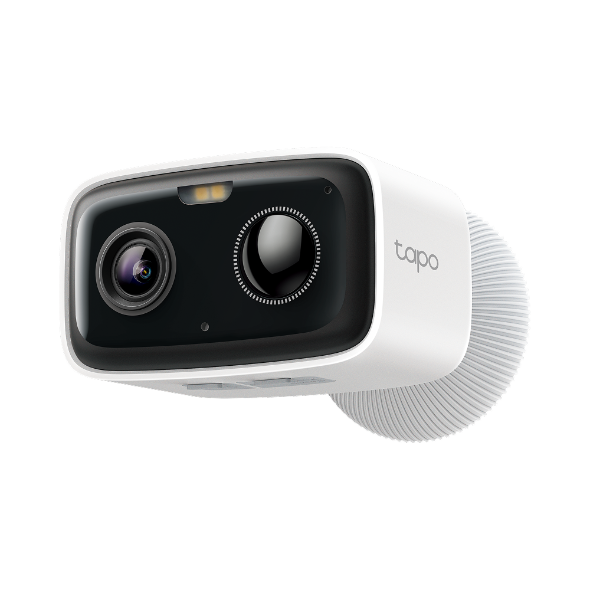
Covering two areas simultaneously from a single mounting point, the Tapo C246D pairs a fixed 2K wide-angle lens for broad coverage with a 2K pan/tilt telephoto lens that zooms in and automatically tracks motion. It's a practical option for entry points where you want both a wide view of the surrounding area and the ability to zoom in on a specific spot, like a front gate and a front door captured from one camera.
It runs on plug-in power, making it well-suited to covered patios, carports, or sheltered exterior walls with a nearby outlet. In humid or dusty climates, the sealed housing keeps the internal components protected without any extra steps on your end.
Tapo C400: Wire-Free Flexibility, Battery-Powered
A battery-powered model makes it simple to monitor outdoor areas without easy access to power. The Tapo C400 is wire-free, with a built-in rechargeable battery that lasts up to 180 days on a single charge, based on Tapo laboratory tests.
At 1080p HD with color night vision, it suits secondary entry points, side yards, garages, or any spot where running a cable is not practical. For best long-term performance in wet climates, position it under an overhang or another structure that reduces direct exposure to rain. In drier climates or areas with mild seasonal weather, it can handle more open placements without concern.
Tapo's Top IP66 Picks
IP66 cameras are the better fit when there's no shelter between the camera and the elements. These three are built to handle fully exposed walls, open driveways, and the kind of weather that might put a lower-rated camera at risk over time.
Tapo C425 Kit: Exposed Locations, Solar-Powered
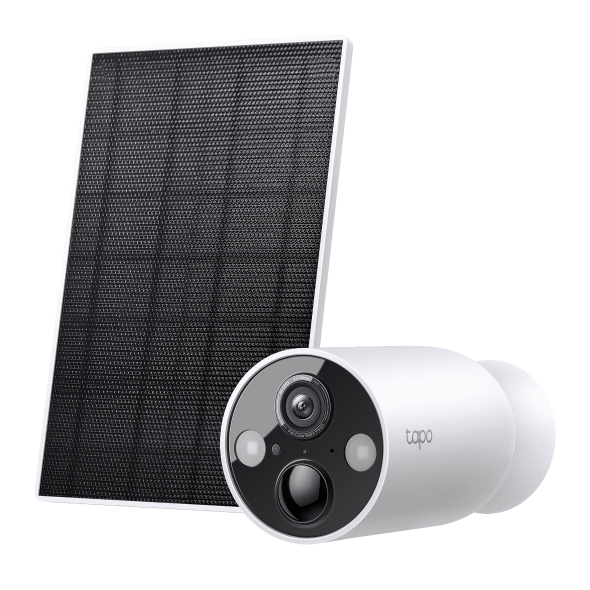
Solar-powered and built for fully exposed locations, the Tapo C425 Kit offers a 142° wide field of view and a magnetic base that makes mounting and repositioning quick and tool-free. The extra-wide field of view means fewer blind spots from a single mounting point, which is useful for open yards, rural properties, or large garage areas where activity can happen across a broad space.
The battery lasts up to 300 days on a single charge, according to Tapo laboratory tests, so it keeps running during extended stretches of limited sunlight. For households in regions with heavy rainfall, strong storms, or snowy winters, the IP66 rating means the camera holds up on an open wall or fence post, without needing shelter.
Tapo C530WS: 360° Pan/Tilt, Wired
Built for locations that need both detail and range, the Tapo C530WS is a wired pan/tilt camera with 3K 5MP resolution and 360° coverage. The higher resolution pays off in large open spaces where subjects may be far from the lens, such as a long driveway, a wide backyard, or a property boundary, where you need to identify activity at a distance.
It connects via Wi-Fi or Ethernet for reliable placement where the wireless signal is less consistent, and Smart Motion Tracking automatically keeps moving subjects in the frame. In climates with heavy rain or persistent wind-driven precipitation, it performs on fully exposed exterior walls where other cameras would need additional protection.
Tapo C320WS: Fixed Lens, Dedicated Entry Points
A wired fixed-lens camera with 2K QHD resolution, the Tapo C320WS detects people and vehicles and includes color night vision for reliable visibility after dark. The C320WS is designed for a single focused sightline: a front door, a garage entrance, or a side gate where you know exactly what you need to see.
It connects via Wi-Fi or Ethernet and is durable enough to withstand exposure to heavy rain, dust, and high winds. For households in high-precipitation climates who want a straightforward, set-it-and-leave-it camera on an exposed wall, it's a reliable option.
Choose the Right Camera for Your Home
IP ratings give you a reliable, consistent way to evaluate whether a camera is built for where you need it. Once you understand the two-digit system, the numbers tell you exactly what conditions the device has been tested to handle.
For most outdoor home security setups, IP65 suits sheltered and semi-exposed locations, while IP66 suits locations that take the full force of the weather. Knowing which rating fits your installation means you can shop with confidence rather than guesswork.
Explore Tapo's full range of outdoor security cameras to find options matched to your setup.
Frequently Asked Questions
What does IP65 mean on a security camera?
IP65 means the camera is fully sealed against dust and protected against low-pressure water jets from any direction. In practical terms, it handles rain, outdoor humidity, and splashing water reliably. It is not rated for submersion or sustained high-pressure jets.
Is IP65 good enough for outdoor use?
For most outdoor installations, yes. IP65 is weather-resistant enough for cameras mounted under eaves, on covered porches, or in sheltered positions where direct exposure to rain and wind is limited. For fully exposed walls or high-rainfall climates, IP66 offers stronger water jet resistance.
What is the difference between IP65 and IP67?
IP65 is protected against low-pressure water jets; IP67 is rated for temporary submersion in up to one meter of water for 30 minutes. IP67 is not tested against high-pressure jets, so a camera exposed to rain may actually perform more reliably with an IP65 or IP66 rating.
Is IP67 better than IP66?
Not necessarily, and it depends on the installation. IP66 handles more powerful water jets, which matters for cameras exposed to heavy rain or wind-driven water. IP67 handles brief submersion, which matters for ground-level or flood-prone locations. The right choice depends on the specific conditions your camera will face.
What IP rating do I need for an outdoor security camera?
For most outdoor home security setups, IP65 is sufficient for sheltered or semi-exposed locations, and IP66 is the better choice for fully exposed walls, open driveways, or areas with heavy precipitation. IP67 and IP68 are worth considering only if your camera will be near ground level in a flood-prone area, or in a setting where submersion is a realistic possibility